
Overview
The Compliance on DCT preview introduces a new architecture for executing masking workflows directly within Data Control Tower (DCT). Now, you will manage the complete Compliance configuration centrally within DCT. Administrators no longer need to manage multiple engines and copy algorithm or ruleset changes between them. This architectural change enables a distributed, headless execution of masking jobs to run on stateless Compliance Nodes (aka headless engines).
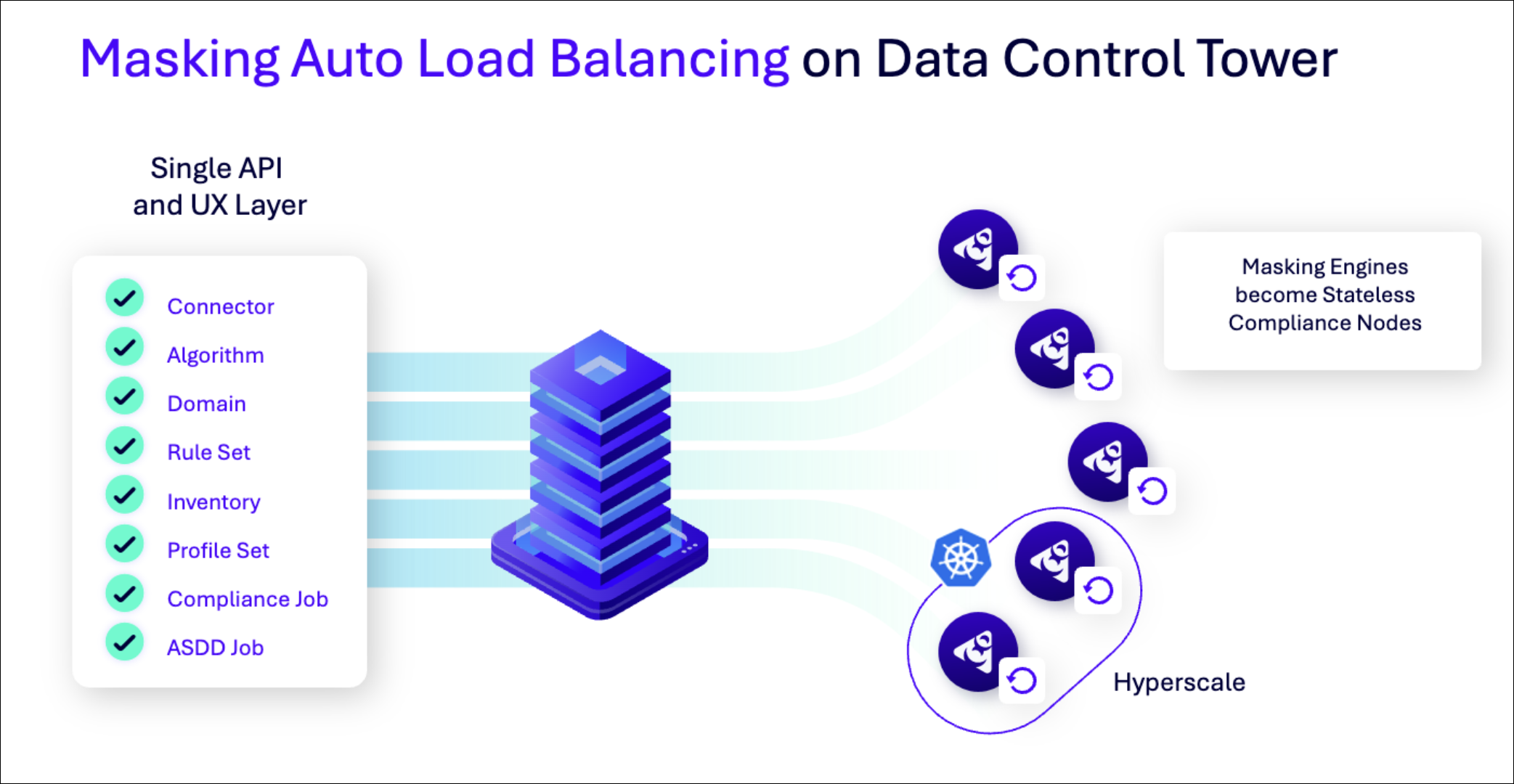
This preview focuses on run-time orchestration of masking jobs without profiling. It is designed to demonstrate operational simplicity before full general availability.
How does this help?
Compliance on DCT delivers enterprise-wide compliance at scale, optimized resource utilization, and reduced infrastructure overhead. It ensures consistent masking standards, unified administration, and governance for non-production environments—all while improving productivity and integration across teams.
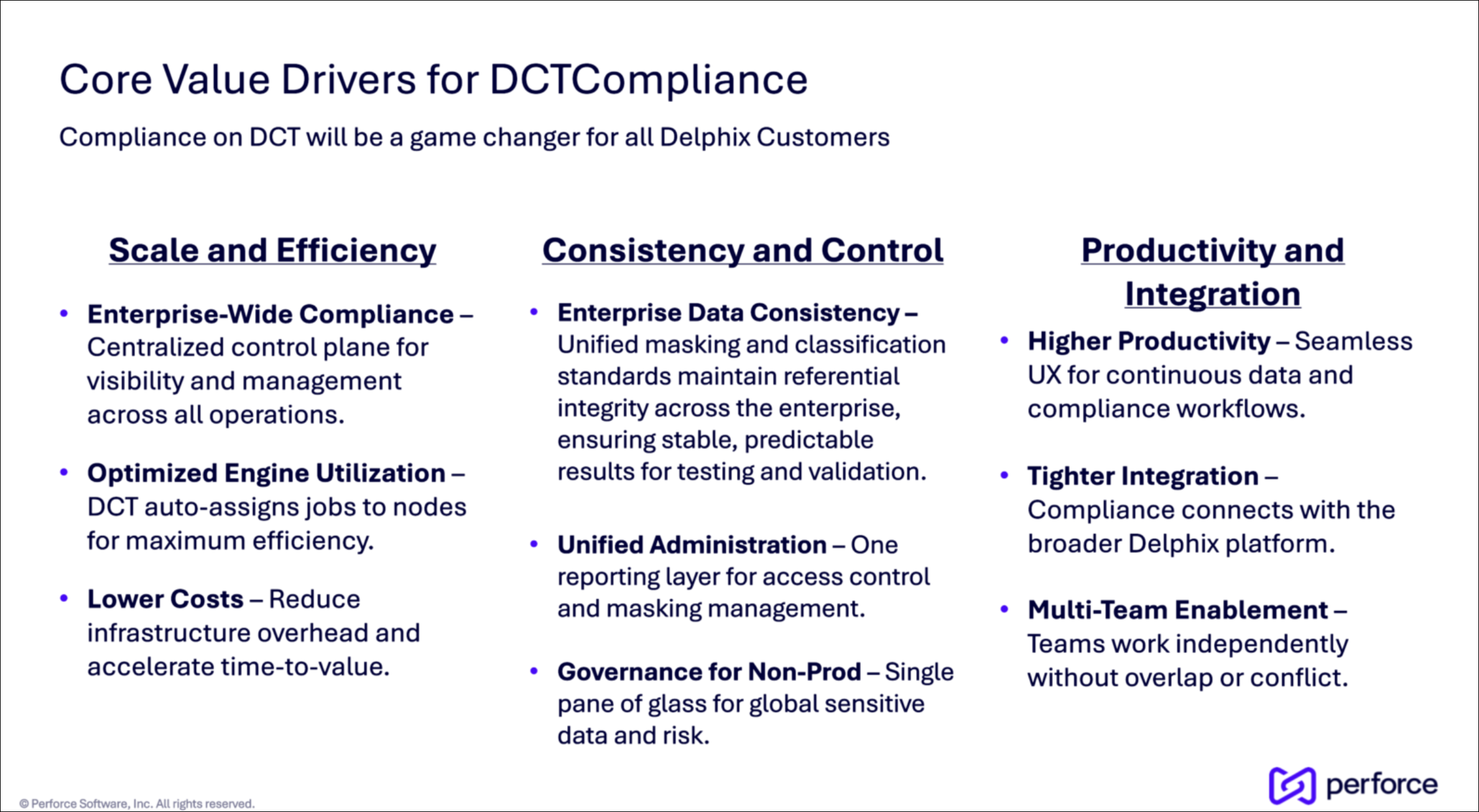
New in this Preview
-
Native Compliance Objects in DCT
Compliance artifacts are now created and managed directly within DCT, including:
-
Connectors
-
Algorithms
-
Data Classes (formerly Domains)
-
Rule Sets
-
Compliance Jobs
-
-
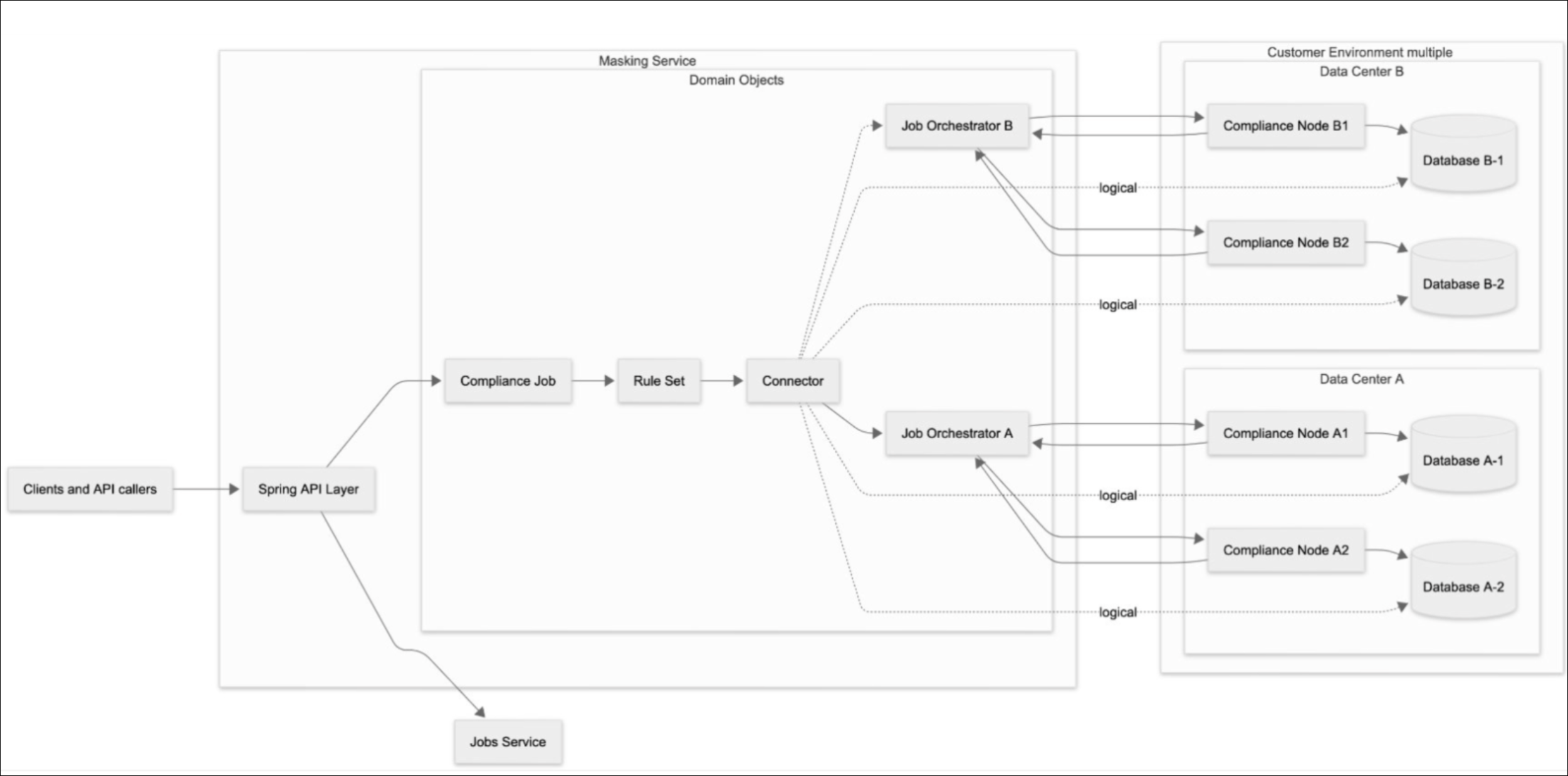
Compliance Nodes
These are stateless execution engines that receive job payloads dynamically at run-time. They perform the same actions as normal Compliance Engines; however, only DCT will interface with them directly.
-
Compliance Orchestrators
Logical groupings of co-located Compliance Nodes managed by DCT for efficient resource allocation.
-
Dynamic Job Sync
Back-end mechanism where masking jobs and dependencies are synced to an available Compliance Node at run-time.
Available capabilities
-
Masking jobs only: Profiling is not supported.
-
Oracle database support: Only single-tenant Oracle database masking is available.
-
New configuration (Greenfield) only: Migration of pre-existing Compliance objects (Brownfield) is not supported in this release.
-
Single job per Node: Each Compliance Node handles one job at a time.
Process steps
-
Enable feature flags by contacting your Account Team or emailing delphix-early-adopters@perforce.com for activation details.
-
Configure Compliance orchestrators and group Compliance Nodes within the DCT UI.
-
Create your Compliance objects by setting up connectors, algorithms, data classes, rule sets, and compliance jobs in DCT.
-
DCT then syncs the jobs to an available Compliance Node and executes.
-
You can now regularly use DCT’s monitoring features to track job executions and resource utilization.
Architecture highlights
-
Single control plan
Centralize control in DCT for job creation, orchestrator management, and execution.
-
Stateless Engines
Leverage new Compliance Nodes that receive job payloads dynamically; no persistent state.
-
Elastic design
Supports future scaling and multi-job orchestration.
See the image below to understand how the new object model is organized within Data Control Tower.
Feedback
If you encounter issues or have feedback about a capability under a feature flag, email us at delphix-early-adopters@perforce.com. Feedback during the preview stage helps guide future development and general availability.
Delphix Support does not support feature flag capabilities.